by Hazel Anna Rogers for the Carl Kruse Arts Blog
I was in the tent where they kept the actors, in the mountains above Sofia, Bulgaria. I was eating some potatoes and a vegetable stew, picked off of a menu featuring ‘Stewed Horse’, ‘Meat soup with pig feet’, and the like. It wasn’t so cold that day. Hot white sun all over the snow, made your eyes smart. The chickens in their square wooden coop sleeping gently, eyes fluttering in dream behind the wire netting. The heater in my tent was making my face flush.
Scott Eastwood came into the tent. I looked at him and smiled. He walked over and rifled through the cuboid refrigerator bag on his chair. He took out some bread and a stew, then sat down and started eating.
He looks exactly like his father. Something different in the nose, maybe, but otherwise, a picture perfect Clint, come back to life, all rugged skin blue eyes. I don’t know what Clint is like, but Scott is calm, and he has that cloak about him that is made of years of this, of tents in the middle of nowhere, of food in plastic boxes and big black cameras and ‘ACTION’ and ‘CUT’. I wonder how long it takes for that cloak to be made, how many years until you’re used to it all. I’m not used to it yet.
We spoke a bit. I’m not sure what about. I felt nervous. Scott felt so much bigger than me, not just in size, but a bigger person, a person with a big name and a face the size of a cinema screen.
At some point during our brief conversation, we got onto acting. I said something along the lines of ‘People act like acting is all mysterious and hard, but it isn’t.’ And maybe something else, I can’t quite remember. Scott sort of disagreed, then he sort of agreed. And then he left to shoot another scene in the snow. Everyone had been enjoying the sun, but it wasn’t good that it was sunny; it wasn’t sunny during the Battle of the Bulge, not sunny at all, so production had to hold off shooting until the sun started waning beyond the mountains.
What I meant by what I said, that afternoon, to Scott Eastwood, was that, for me, the process of acting isn’t a difficult one. It is not difficult to get there if you can find some truth in it. If you believe what you’re saying, then other people will believe you. You can’t ‘play’ the truth, you really have to believe it, believe it as much as you believe that you have a heart beating in your chest and that the sun will rise another day. But that isn’t a hard thing to do, it’s just that some people have a natural propensity for it, a propensity they can practice and train to make it easier to fall into. Acting isn’t difficult. As Denzel Washington succinctly put it: “Your son got shot in the face? That’s difficult. Making a movie is a luxury.” Being an actor is not hard. Maybe the life around it is hard; the waiting, waiting, hoping, hoping. But I think it is good to wait. It is good to train patience, to train oneself to come back from failure an inordinate number of times. It builds resilience, I think.
What I also meant, when I said to Scott that acting wasn’t hard, is that acting practitioners, particularly directors and acting teachers, imply a sort of mysticism when it comes to acting. As though there were something as unreachable in the act of acting as there might be in the act of painting in the style of Rembrandht. I’m speaking broadly about the Western acting traditions; in the Noh theatre of Japan, of course, a rigorous physical and vocal training is required to perform in the traditional play. This is a different form of theatre. In the West, above all, we prize Naturalism; the ability to be truthful and honest in the characters we play, however melodramatic or tragic they might be. There are different styles of performance – clown, viewpoints, physical theatre, and more – but, on the screen as much as in the theatre, what we strive for is a suspense of disbelief in our audience, for them to believe us in the role, and for us to believe ourselves.
I had an acting class last week, a one-to-one with a teacher I had previously admired from afar. His process, I learned, was very different from my own. His was the process of many teachers I’d encountered while training at drama school, an approach similar to the literary analysis I had studied during my literature degree. This process entails such methods as Uta Hagen’s Nine Questions:
Who am I? (Characters)
What time is it? (Century, year, season, day, minute)
Where am I? (Country, city, neighbourhood, house, room, area of room)
What surrounds me? (Animate and inanimate objects)
What are my given circumstances? (Past, present, future, and the events of the play)
What is my relationship? (Relation to total events, other characters, and to things)
What do I want? (Character, main and immediate objectives)
What’s in my way? (Obstacles)
What do I do to get what I want? (The action: physical, verbal)
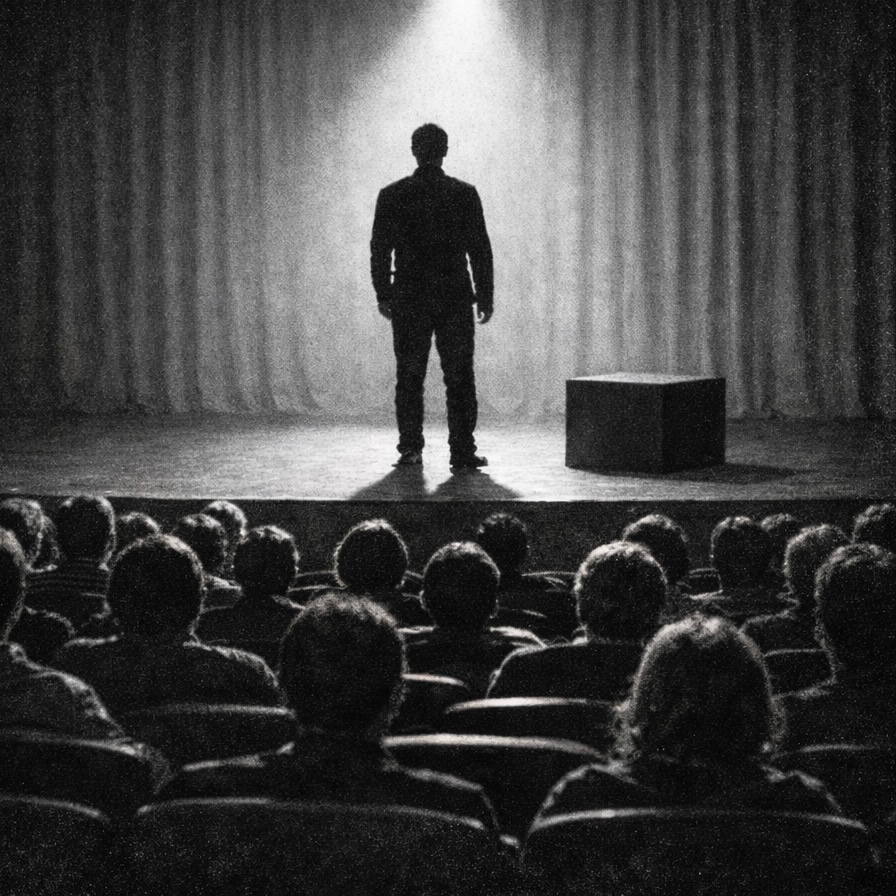
Then there’s Meisner’s Technique, which focuses on an excess of repetition aimed at increasing the instinctive abilities of the actor by reducing their need to think. Then there’s Strasberg’s ‘Method’, a deep analysis of character, and the use of personal memories along with the fabricated memories of a character to create realism in performance. And Stanislavski, with his System of the ‘art of experiencing’, creating a bridge between the actor and the character, and involving a deep script and character analysis, along with the creation of objectives and superobjectives to trigger action.
I’ve skirted over these all pretty briefly, but you get the picture. These are rigorous training methods, often specifically centered on heavy script analysis and prediction of action based on set objectives and circumstances. I admire these practices, and have engaged in them previously, but they are not how I ‘get there’.
My reasoning for not engaging in these various acting approaches is that I believe these methods act on a predictability of character. We have predetermined our objectives, as in Stanislavski; we have analysed our character so much that we think we know his dreams, as in Strasberg; we have decided that instinct is more important than pausing to think, as in Meisner; we have decided that every word we say is with the aim of getting something, as in Uta Hagen.
I don’t think I know what I want, not really. I don’t think I know what I’m going to do next, next minute, next hour, next week, not really. I don’t always even know exactly where I am.
I don’t believe that characters are predictable, as I do not believe that people are predictable. The joy of acting is in the unpredictability. Sometimes, I might be saying one thing, and thinking entirely about another. Who am I to say that a character would not experience the exact same thing? Who am I to say that his ‘objective’ would be the first thing on his mind? Sure, it’ll come to him – he’ll be confronted by it when the other characters on the stage catch his attention. But he is a breathing, living man, and his world is not so small as to enable me to know it all. I do not know what my sister is thinking as we walk together through the wetlands not far from her house, and, yet, I know my sister better than anyone. I do not even pretend to know myself well enough to know how each day will pass, what will be different, what will be the same.
All actors have different processes, processes they’ve whittled down to an essential core over years. Anthony Hopkins’ acting process consists of reading a script many, many times in order to embed the lines in his head, so he can be physically and mentally free on set or stage. Joaquin Phoenix approaches roles with a lot of physical training and discipline, such as the extreme physical transformation he went through to become Arthur in ‘Joker’, but he also stated in an interview, when asked “What was the mental strain…of playing a character who’s experiencing such severe anxiety and depression and God knows what else?”, that:
“It’s not really like that…[there was a moment where] I was looking at this photo, and it was heartbreaking, and it had such an effect on me, so in that moment, I’m affected by this idea, but then I went to fucking lunch, and everything was fine, you know, it’s just what making movies is…I hate to say this, I hate to dispel the mystery, right, the mystique of making movies, but the truth is, you know, sometimes it just doesn’t affect you that much. Sometimes it does, but it’s usually like in these moments where you have to find that emotion, you experience it in that moment, and then you’re done.”
And, further on what I was talking about earlier, about ‘objectives’ of characters:
“There’s the cliché, you know, of ‘what’s my motivation’, and there was a period of time where I did obsess about that more, and I guess I started to feel like it didn’t seem like a real reflection of what my experience is a human. I don’t always understand what motivates me. Human psychology is so complex; we may think that we know what it is that is motivating our behaviour but more often than not it is subconscious…With Arthur [Joker, 2019]…I become too fixated on this idea, and I tried to control it and maybe there’s even a part of you, your ego, that makes you think you’re doing something good, like ‘this is a smart idea’, ‘this is interesting’, and looking back on it…after I started reevaluating the character, we [he and director Todd Phillips] realised it was wrong, it was the wrong approach, and we had to let it go.”
I believe in discipline. I believe in rigorous training, in immersing oneself in one’s character’s world, as far as possible, from food to movement to books to music. But I do not believe in the seemingly literary rigour of some acting methods. Back when I was studying literature, I didn’t especially enjoy the focus on reading critical academic analyses of books, for the opinions of these critics seemed to outweigh the literature itself. I no longer read literary criticism, and I am a better reader for it.
There was something else which my acting teacher said, which I wanted to speak on. He said acting was ‘altruistic’. I’ve thought a lot about that word since he said it. It speaks to something else about acting, and actors; their desire to make more meaning than is worth out of their profession.
I believe in the power of film and of theatre. Movies have changed my life, they really, truly, have. And to be a part of a movie like that, one that kicks about someone’s brain and changes the way they look at the world, now that would be wonderful indeed. But my choice to become an actor was not because of altruism. Altruism is selflessness, is acts performed purely for others, is a nurse on a battlefield, is a soldier on the frontline, is a mother giving up her career for her children. Altruism is saving a life without thinking how it might harm your own, or knowing it might and doing it anyway. Acting is not that, at least, not for me. It was a calling, of course it was. I knew that it was what I must be, ever since I was seven years old, watching Doctor Who on the big boxy grey Panasonic TV set in our living room.
But it was also something else. I am drawn to acting because of a compulsion, the satisfaction of fitting into someone’s vision, of being the little square of canvas that completes the painting, of translating the thoughts of a director onto the screen, or the stage, of being told what to do and following the instructions like my life depended on it, of fulfilling the conception of a master, making real what he previously had only dreamed of, of bringing my heart to a film set and opening it up, baring it for all to see, all of myself, all of myself bursting out into the precious character I have been gifted until the lines between us become so faint that one could call them invisible.
And, then, I love to be someone else. There is nothing more wonderful. It’s magical. It’s like falling. I am walking down the street, and I close my eyes, and when I open them again, I am Elizabeth Bennett and I am going over Hampstead Heath towards Mr Darcy, or I am Rose Tyler going to meet The Doctor, or I am Bess McNeill walking into a church to pray to God, or I am Laura Palmer going mad. It is ridiculous, and it is beautiful, and it is a game, the best game in the whole world.
===========
The Carl Kruse Arts Blog homepage is at https://carlkruse.net
Contact: carl AT carlkruse DOT com
Other articles by Hazel include On Rising Theater Ticket Prices, Acting and Art, and Performance Art.
Also find Carl Kruse on Stage 32 and on his other blog Carl Kruse – Rummaging for the Useful.
